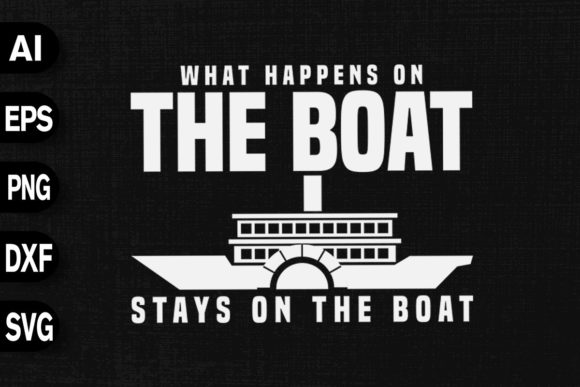
What Happens on the Boat Stays Graphics for T-Shirt Designs
When I first opened the file for What Happens on the Boat Stays, I was checking it against my usual criteria for a new graphic design asset. As someone who has been selling digital products on Etsy, Creative Fabrica, and through print-on-demand channels for years, I have learned that not every design that looks good on screen translates into a profitable commercial product. This particular SVG design carries a playful, vacation-driven mood that immediately made me think of themed merchandise for beach trips, lake vacations, and boat outings. The visual personality leans toward bold and conversational, making it a strong candidate for apparel and accessory products aimed at adults who enjoy water-related leisure. What I appreciate from the outset is that the design feels intentional without being overcomplicated—it gives the impression of a piece that can hold its own across multiple product categories without losing its core appeal.
Evaluating This Design for a Real Shop Scenario
Imagine you are preparing a new product collection for your Etsy shop or your Shopify store, and you are looking for a graphic that can anchor a small line of merchandise. That is exactly the scenario where What Happens on the Boat Stays becomes relevant. In my own workflow, the first step is always to assess whether the design can work as a standalone piece or if it needs to be bundled with other elements. This file, with its direct phrase and straightforward layout, works well as a hero graphic. The text is clear, the sentiment is familiar to anyone who has spent time on the water, and the style has enough personality to catch a browser’s attention without feeling like it is trying too hard. For a shop that sells products aimed at boat owners, fishing enthusiasts, or people who enjoy coastal living, this graphic design asset fits naturally into a larger thematic collection.
Testing Across T-Shirt Designs and More
One of the most important habits I have developed over years of selling digital products is testing a design on several product types before I finalize my listing. What Happens on the Boat Stays was designed as a t-shirt SVG file, and it certainly performs well on standard apparel mockups. I placed it on a white tee, a dark navy hoodie, and a light gray tank top, and the readability held up across all three. The contrast is strong enough that it does not get lost on darker fabrics, which is a common failure point for many phrase-based designs. Beyond t-shirts, I tested it on a tote bag mockup, and the casual nature of the design complemented the fabric texture nicely. Mug and tumbler mockups also worked because the design does not rely on fine details that would distort on a curved surface. For sticker applications, the phrase is short enough to fit on a 2-inch square or a small pop socket without requiring extreme size reduction. I also tried it as a banner graphic for a social media listing, and the bold lettering made it readable even at thumbnail size.
Product Presentation and Visual Storytelling
How you present a design in your shop can make the difference between a sale and a scroll-past. With What Happens on the Boat Stays, the presentation should lean into the lifestyle context. Mockups that show the product on a dock, near a boat, or with subtle nautical props will reinforce the message and help customers imagine the product in their own lives. I found that using a mockup with natural lighting and water-related backgrounds increased the perceived value of the listing. The thumbnail itself needs to be clean—since the phrase is the main selling point, avoid cluttering the preview with too many additional elements. When I create listing images for this type of graphic design asset, I typically use one clean mockup on a white background, one lifestyle mockup, and one flat lay that shows the design printed on different surfaces. This approach builds trust and helps customers understand exactly what they are getting. For Etsy product listings or print-on-demand pages, having a clear visual hierarchy is essential, and this design supports that because the text is the primary focal point.
Where This Asset Excels Across Product Categories
Based on my testing, What Happens on the Boat Stays performs best in categories where the product itself has some surface area to display the phrase clearly. Large product previews such as full-size t-shirt fronts, hoodie backs, and medium to large tote bags are ideal. Themed bundles, such as a vacation survival kit or a boat day collection, benefit from including this design because it adds a recognizable phrase that ties the set together. For printable products like iron-on transfers or sublimation designs, the file structure is straightforward enough that you can resize without worrying about loss of quality. Social media graphics promoting a summer sale or a lake house rental could also use this design as a header image or a pinned post visual. In terms of decorative layouts, the design works on wall art prints for a lake cabin or as part of a set of printable signs for a vacation rental. When I consider brand identity, a design like this can become part of a small business branding line for boating-related shops or event planners who host lake-side gatherings.
Caution Areas for Small Products and Complex Cuts
No design is perfect for every application, and I always encourage sellers to test before committing to a full product run. With What Happens on the Boat Stays, there are a few situations where caution is warranted. Tiny sticker details are one area to watch—if you shrink the design down to below an inch for a sticker sheet or a small pop socket, the readability may suffer. The same applies to overly complex layouts where the design is surrounded by too many other graphic elements. When used on dark backgrounds, the contrast is generally good, but I would still preview it against a navy or black product image to confirm that the text does not blend into the shadow areas. For Cricut and Silhouette projects, the SVG file should be inspected for cut lines. If the design has any thin strokes or narrow spaces between letters, those areas may not cut cleanly on small-scale adhesive vinyl projects. I always recommend opening the file in your cutting software and running a test cut on scrap material before cutting the final product. For low-resolution print products such as cheap promotional items or poor-quality tumblers, the design may not hold its crispness, so stick with reputable print providers who use high-resolution transfer methods.
Practical Seller Notes Before You Publish
Over the years, I have developed a checklist that I run before I publish any new graphic design asset in my shop. For What Happens on the Boat Stays, the following steps are particularly relevant. First, test the design on real mockups across at least three product types—t-shirt, mug, and sticker—to see how the phrase scales. Second, preview it as a marketplace thumbnail at 150 pixels wide to ensure it is still readable when a customer scrolls through search results. Third, check how the design looks on both white and dark backgrounds; if you are selling the digital file itself, include a transparent PNG and a black-and-white version. Fourth, verify the SVG cut quality by loading the file into Cricut Design Space or Silhouette Studio and checking for overlapping paths or stray nodes. Fifth, confirm that the file resolution is appropriate for the products you plan to create—300 DPI for print, and a clean vector for cut files. Sixth, organize your files clearly for customers: separate folders for SVG, PNG, EPS, and DXF if you offer multiple formats. Seventh, pair the design with complementary font styles when you use it in templates. A bold sans serif works for the main phrase, but you can also experiment with a script font for a secondary line like “Summer 2025” or a handwritten style for a more casual feel. Eighth, and most importantly, verify the commercial license terms. If you purchase this design from a creative marketplace, confirm that the license allows you to sell finished physical products, and if you are selling the digital file itself, check whether you need an extended license.
Supporting a Professional Product Collection
Adding What Happens on the Boat Stays to your product lineup can help you create a more cohesive collection, especially if you are targeting a niche audience. For small business owners who sell boating accessories or handmade items for lake vacations, this design provides a consistent visual theme that customers will recognize. In my own shop, I have found that designs with a clear lifestyle hook tend to generate more repeat purchases because buyers come back looking for complementary products. This design also works well as part of a design bundle—pair it with coastal-themed graphics, anchor motifs, or sunset illustrations for a more complete set. For content creators and blog writers who produce vacation guides or boat safety tips, using this design on a promotional image or a social media graphic adds personality without distracting from the message. When you maintain brand consistency across your product thumbnails, listing images, and packaging, customers perceive higher value and are more likely to trust your shop. This is especially true on competitive platforms like Etsy or Amazon Handmade, where visual hierarchy and professional presentation can directly influence click-through rates.
Final Thoughts on This Graphic Design Asset
From my perspective as someone who has reviewed hundreds of digital products over the years, What Happens on the Boat Stays offers solid potential for sellers who understand their target audience. It is not a design that tries to be everything to everyone, and that is its strength. The phrase is specific enough to attract a particular buyer—someone who owns a boat, frequents a lake house, or enjoys tropical vacations. As a commercial design, it translates well across t-shirt designs, mug graphics, tote bag prints, and vinyl decals. The file structure is compatible with most cutting machines and print workflows, and the visual style is clean enough to hold up in both large and medium product formats. Before you publish, take the time to test it on mockups, review the cut quality, and confirm your licensing. If you do that, this graphic design asset can become a reliable part of your product catalog, supporting your shop’s growth while keeping your offerings fresh and relevant for the customers who matter most to your business.